
Bahram Beyzaie's Ayyar-e Tanha: The Iranian Society on the Eve of the Mongol Invasions
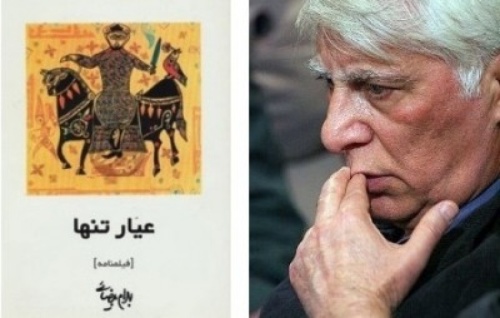
The historical resources of the Mongol era introduce us to social changes shaped by political agents and structures; however, social changes among non-political classes of society can also be studied through literary sources. Drawing on his keen insight and imagination, Bahram Bayzaie depicts scenes of Iranian society on the eve of the Mongol invasion.
We can gain a deeper understanding of medieval Iranian history by studying dramas and films. The scenario Ayyar-e Tanha (lonely champion) by Bahram Bayzaie portrays the Mongol invasion as the central episode in Iranian medieval history. Focusing on the cultural and political conditions in Iran on the eve of the Mongol invasion, the author draws the audience's attention to the internal causes of Iranian failure.
Escaping from enemies, Ayyar is saved by an old man who has pleasant memories of Ayyaran (champions) and has written many books about them (pp. 9-10). Comforting the Ayyar, the old man mentions that he wants to name his upcoming book “Ayyar”: “Don’t worry…This inauspicious dog {Chengiz} will never penetrate even the first fence. God has guaranteed Muslims from kafer {infidels}’s slaughters… Where is Temuchin now?” (pp. 11-12). The old man can never believe that the Mongols are conquering Iran.
Unlike all the old man's hospitality, the Ayyar sexually assaults the old man’s daughter when she is getting married. The old man cannot believe Ayyar’s behavior, “You are Ayyar, aren’t you?” (p. 12). Then he sets fire to all his writings because they are not grounded in the realities of Ayyars (p. 22).
The old man’s daughter, who cannot return to her previous life, accompanies the Ayyar to inform people that the Mongols have invaded Iran (p. 20). The longer the scenario continues, the more positive aspects of the Ayyar character emerge. He not only falls in love with the girl and saves her life several times, but also does his part to save the lives of others who are unaware of the Mongol invasions. As the scenario concludes, the Ayyar stands alone against the Mongols (p. 102).
Through a variety of characters, Bayzaie criticizes political agents and scholars who fail to defend their territories. Sultan Muhammad Khwarazmshah is escaping from the Mongols anonymously, “This secret must not be revealed. It’s commanded that no one must know where the Sultan’s going” (p. 42).
However, the scholars are disputing about trivial issues and even wishing the Mongols to slaughter all those scholars who think differently, “What are you looking for in the book of wonders?
– The story of the Mongols. It’s said that they have turned libraries into stables. They are sewing tongues, burning books, and breaking pens; Oh! They are the troops of ignorance.
– Who can judge whether they have done any right or evil? I have seen books that had to be burned.
– I’m a bureaucrat, so I don’t deal with breaking and burning.
- You seem to be Heterodox in your words. Don’t speak like philosophers and sophists. I wish the Mongols would come and vanish all these skeptics” (p. 71).
Ordinary people are also criticized for relying on spells and praying to survive (pp. 41-42). Ayyar-e Tanha narrates not the Mongol invasion, but the conditions of the Iranian society that led to Iranian failures.
Maryam Kamali
Bayzaie, Bahram (2010). Ayyar-e Tanha, Tehran: Roshangaran.