
Ya’qub’e Layth Emerging from the Unfinished Structure of ‘Ayyari
This article presents the book Ya’qub’e Layth-e Saffar, written by Dr. Mohammad Ebrahim Bastani Parizi (1924-2014). Ya’qub-e Layth (840-879), the Iranian military leader, entered the political scene more than a century after the Iranian commanders under Abu Muslim Khorasani (718-755) transferred power from the Umayyads to the Abbasids and made significant strides toward Iran's political independence from the Islamic Caliphate. The rise of Ya’qub-e Layth-e Saffar marked an unprecedented moment of power in post-Islamic Iranian history. Ya’qub joined the ‘Ayyari group, a class of warriors from ordinary families who influenced some Iranian cities, including Sistan. ‘Ayyar,’ literally meaning “vagabond,” was used to describe members of medieval fotowwa (fotūwa) brotherhoods and similar popular organizations. The article also introduces the book Ya’qub’e Layth-e Saffari to explore Ya'qub's role in the political structure of medieval Iran, highlighting chapters that reveal the Ayyaran's role in Iran’s political landscape.
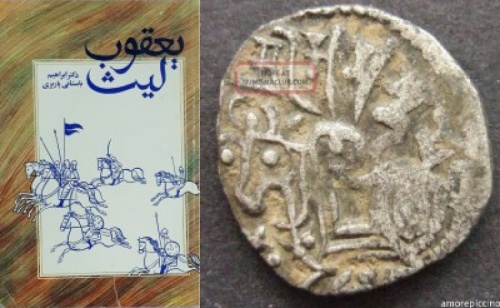
Ya’qub-e Layth's book, written by Dr. Mohammad Ibrahim Bastani Parizi, was published by Elm Publication in 1964. In this review, we examine the 2004 edition of the book. It features an Introduction and twenty-three chapters. The Introduction includes three prefaces by the author for the first, third, and seventh editions, as well as letters from two prominent Iranian authors—Dr. Mohammad Ali Jamalzada and Dr. Mohammad Ali Eslami Nodoushan—and an introduction by Fathali Ra'ies, the translator of the book into Arabic, published in Cairo. In the seventh edition’s introduction, Dr. Bastani highlights key points about the geography of Sistan and its impact on the living conditions and socio-economic status of its people.
In Chapter 3, “Ya’qub before Rising to Power," Dr. Bastani explores Ya’qub’s life before he gained power. Ya’qub’s father was a simple copper smith (Saffar). According to his family’s tradition, Ya’qub’s ancestors traced their lineage to Anushirvan (r. 531–579), the renowned Sassanian king, and to Tahmureth-e Divband, one of Iran’s mythical kings (Bastani Parizi, pp. 135–136).
At a young age, Ya’qub, like his father, was a coppersmith whose shop in the bazaar was the center of ‘‘Ayyars." It was through this shop that he first became acquainted with this group: “He {Ya’qub’s father} ate whatever he earned with the ‘‘Ayyars.” Similarly, Ya’qub spent everything he earned from this profession on young people, especially ‘Ayyars’ (Bastani Parizi, pp. 137-138). Ya’qub had big ambitions, which clearly required secure financial resources to achieve. Therefore, Ya’qub left his job and became an unofficial toll collector (Zayn al-Akhbar, p. 139). These new financial resources helped attract many young people to the ‘‘Ayyari group (Bastani Parizi, p. 140). Undoubtedly, Ya’qub's charismatic personality as a social activist played a crucial role in drawing young people into this group (Tarikh-e Sistan, p. 200).

The fourth chapter of the book, “The Kharijis, the Heroes of the Hilmand Plains,” explores the two groups of Kharijis and ‘Ayyarans who played a key role in shaping Ya’qub-e Layth’s political aims. In this chapter, Dr. Bastani explains why the Kharijis gained power in Iran’s eastern regions, especially Sistan. After the ‘Ayyari group emerged in Sistan or just before that, the Kharijis managed to make Sistan the hub of their power network. The discriminatory actions of the Umayyad caliphs and Iraq’s ruler, Hajjaj ibn Yusuf, pushed many people toward opposition groups, especially the Kharijis. Sistan became a gathering place for these groups, who fled from the Umayyad rulers and sought safety there (Bastani Parizi, p. 152). Bastani details how, under the Umayyad and Abbasid dynasties, many Khariji leaders, like Abu Hamza al-Khariji (d. 748), capitalized on the people's hatred of the Abbasid Caliphate to gain power.
In the sixth chapter, “Sistan's First Encounter with Islam,” the author explains why Sistan, more than any other city in Iran, was able to harness the capabilities of the ‘Ayyari group, and with Ya’qub’s help, played a significant role in the Iranian political scene for the first time—and possibly the last—up to now (Bastani Parizi, pp. 190-191). The eighth chapter, “The Effects of Famine and Drought,” discusses how the famine of 835 paved the way for growing discontent with the caliphate and triggered the uprising of the people of Sistan, led by Ya’qub. This chapter states that the people of Sistan suffered from poverty due to the taxes they paid to the government in Baghdad (Bastani Parizi, p. 231). The ninth chapter, titled "The Social Situation of Sistan," describes how the ‘Ayyars of Sistan, under Ya’qub, united with the ‘Ayyars of other cities and managed to defeat the Kharijis who had gathered around ‘Amrow-e Khariji (Bastani Parizi, p. 254). In the eleventh chapter, "Towards the North and the East," Dr. Bastani discusses Y’qub's conquests in Kabul, Fars, and Herat, and how these attacks involved the looting of cities and palaces, bringing wealth to Sistan. Bastani explains that Ya’qub himself did not have the chance to focus on rebuilding Sistan, and later, under ‘Amr ibn Layth (r. 879-901), Ya’qub's brother, these financial resources were used to develop numerous urban and rural infrastructures in the region. During this period, Ya’qub also sent many of these spoils to Baghdad to gain the caliph's approval to conquer these lands.
Chapter sixteen, “The Collapse of the Tahirids,” discusses Ya’qub's conquest of Nayshapur and the overthrow of the Tahirids, who consistently maintained close ties to the Abbasid caliphs. This conquest marked a turning point in Iranian history and affected the relationship between Ya’qub Saffari and the Abbasid Caliph (Bastani Parizi, pp. 336-337).

Chapters Seventeen to Twenty-one of the book describe the conflicts between Ya’qub-e Layth and the Abbasid Caliph. Dr. Bastani explains that Ya’qub tried very hard to maintain his relationship with the caliph, at least during that time when the caliph had not yet consolidated his power in the conquered lands, but it never succeeded. These conflicts, which led to Ya’qub’s failure, prevented him from completing the process of establishing an independent political structure. This goal of independence was not pursued by other Saffari emirs or by other activists from the ‘Ayyari group in different cities, so it remained unfinished.

Chapter twenty-one, “The End of Ya’qub’s Reign,” focuses on the death of Ya’qub-e Layth in 879. He died at the age of 39 in Jondishapur and was buried in the village of Shahabad. It provides detailed, interesting information about the tomb of Ya’qub-e Laythh.
Ya’qub laid the groundwork for reaching the doorstep of the Abbasid Caliphate in Baghdad. Despite this, the question arises: why did the ‘Ayyari group not pursue its goals? The book, Ya’qub’e Layth-e Saffari, answers many relevant questions. Still, its greatest strength is that it raises even more questions in the minds of interested readers, including Muhammad Ali Jamalzada. In his letter to Dr. Bastani, which was published in the introduction of the book, Jamalzada asks for reasons behind the failure of Iranians, including Ya’qub, against the Arabs—specifically against the Abbasids—and the inefficiency of Iranian military structures against the Abbasids (Bastani Parizi, pp. 106-107). Jamalzada is particularly interested in understanding the role the ‘Ayyari group played in Iran’s history and why they could not achieve independence from the Abbasids (Bastani Parizi, 110). While the book does not answer this question, it encourages readers to conduct further research to find answers to this and many other essential questions.
Maryam Kamali